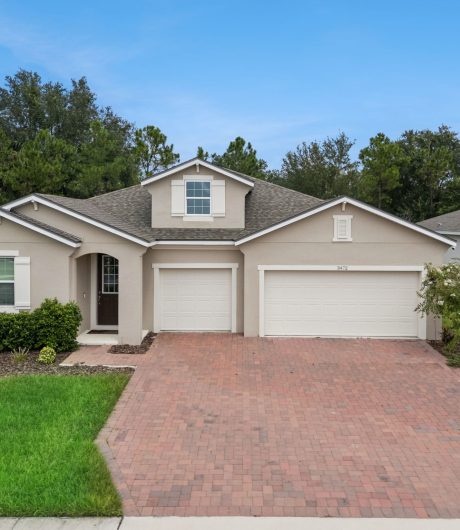
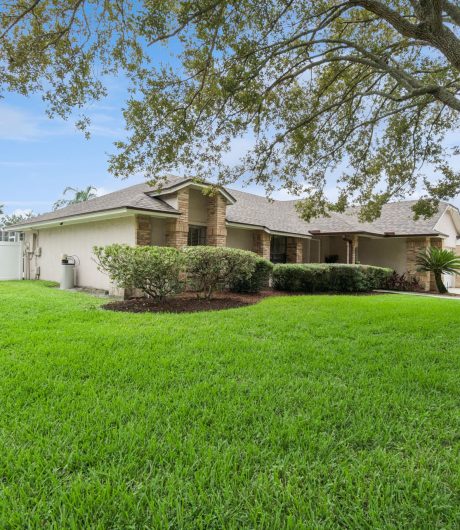
Amendment 3 just passed in the great state of Florida with 62% of voters who cast ballots on the amendment voting in favor of increasing the homestead exemption for primary homes. But what else does Amendment 3 do, are school taxes protected and are property taxes being abolished as a whole here?
Unfortunately there is a lot of misinformation surrounding this game changing amendment. Whether or not you voted in favor of these changes, not knowing what exactly changes and what stays the same is causing major anxiety for some. So I’m outlining a few key points and busting some mis info I’ve seen online below.
Myth #1- Amendment 3 abolishes property taxes in Florida.
Although some wish it did, it does not abolish property taxes in Florida.
In 2027 current residents and primary homeowners in Florida can claim $150,000 in exemptions, and $250,000 in 2028. It’s important to note that if you were already a permanent Florida resident as of December 31, 2026, even if you were renting, you can claim the expanded exemption when you purchase a primary residence.
If you become a permanent Florida resident after December 31, 2026, you can still qualify for the existing Homestead Exemption when you purchase a primary home. The expanded exemption becomes available beginning in your fifth qualifying homestead exemption year.
Another misconception is that non-homesteaded properties will no longer pay property taxes. That’s incorrect. Amendment 3 reduced the annual cap on increases in assessed value for non-homestead properties, including businesses, second homes, and investment properties, from 10% to 5%. These properties remain subject to property taxes.
Myth #2 You can no longer claim homestead exemption if you move to Florida for 5 years.
Just plain wrong. If you become a Florida resident after December 31, 2026, you can still qualify for the existing Homestead Exemption when you establish an eligible primary residence. The expanded exemption becomes available beginning in your fifth qualifying homestead exemption year.
Myth #3 Schools will lose funding due to Amendment 3
School district property taxes are protected under Amendment 3. The increased Homestead Exemption does not apply to school district property taxes, so qualifying homeowners will continue to pay those taxes.
Myth #4 Libraries, parks, police and fire will lose funding now
Not necessarily! Amendment 3 does not automatically require local governments to close libraries, eliminate parks, or reduce police and fire services. However, lower property tax revenue could require local governments to reconsider budgets and funding priorities. I believe there are other options worth exploring before reducing essential services.
Amendment 3 specifies that counties and municipalities must use property tax revenue for public safety, education and schools, infrastructure, natural resources, bond debt service, employee retirement benefits, and government operations and administration. Other expenditures may also be approved by county officers or county or municipal governing bodies, unless prohibited by state law.
Something I never saw opponents of Amendment 3 ever state was how much property taxes and property tax revenue increased in the last 7 years. Redfin reported here that property taxes in cities like Orlando and Tampa went up as much as 60% since 2019, with revenue from property taxes going up as much as 90%.
It’s been said that the best indicator of the future is the past. In 2008 Floridians voted to increase property tax exemptions for primary homes from $25,000 to $50,000 effectively doubling the exemption. The median home value at that time was $218,700, making the exemption 23% of the median home’s value.
Going back even further, when the homestead exemption was increased from $5,000 to $25,000 in 1980, the median Florida home value was $45,100, making the homestead exemption approximately 55% of the median home’s value.
My point being that we have been here before and the sky did not fall. It’s important to note exactly how much property taxes have risen in the last seven years to see why the relief is appreciated so much by Florida homeowners.
I also believe that local governments will have other options than police, fire, medical and parks, if budgetary adjustments are needed.
In our beautiful state we have so many with second homes, businesses and vacation and investment rental homes that will not be eligible for the homestead exemption savings. It’s also important to remember, many Florida homes have assessed values well over $250,000, which will still be assessed property tax in the same manner as today. Amendment 3 will provide real relief for homeowners and in my experience will provide Seniors, the middle class, and single owner households the most relief.
Myth #5 Renters can’t benefit from Amendment 3
Personally I think renters absolutely WILL find value here. First, if you’re already a permanent Florida resident as of December 31, 2026, even if you’re renting, you can qualify for the expanded Homestead Exemption when you purchase a primary residence, without the waiting period that applies to new Florida residents.
Second, When qualifying for a mortgage, lenders consider more than just the principal and interest payment. Property taxes and homeowners insurance also factor into the total monthly housing expense.
For buyers who qualify for the expanded Homestead Exemption, lower projected property taxes could potentially improve affordability and mortgage qualification. Of course, actual savings will depend on the home’s assessed value, local tax rates, and the lender’s underwriting requirements.
Myth #6 — Amendment 3 Eliminates Save Our Homes and Portability
A Florida homeowner’s Homestead Exemption is applied to the assessed value of their home, which can be different from its market value.
For example, your home may have a market value of $500,000, but its assessed value may be only $425,000 because of the Save Our Homes benefit.
Save Our Homes limits annual increases in the assessed value of qualifying primary residences to 3% or the rate of inflation, whichever is lower.
Portability allows eligible homeowners to transfer up to $500,000 of their accumulated Save Our Homes assessment benefit when moving from one qualifying Florida homestead to another.
Save Our Homes and portability benefits remain in place under Amendment 3.
In conclusion:
I completely understand and respect that not all agree with this update to property taxes in Florida. My hope is just that residents, and future residents, will take the time to understand what Amendment 3 actually does. If you have questions about how this impacts you, leave a comment or reach out to me directly. I’m always happy to talk Amendment 3 and real estate.